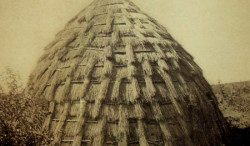
Our Story
Guidiville’s tragic history is not unique; all California Indian people suffered similar fates. In a few brief centuries the native people of California were enslaved, murdered, and driven from their land to make way for European settlers and fortune hunters. They saw the rich ecosystems that they had maintained and evolved for millennia plundered and destroyed in a matter of decades. They were subjected to fraud and legal chicanery. In the 21st century, they continue to struggle to survive and to protect and preserve their culture and wisdom for a time when it will again be recognized and honored.
Before Columbus
The Guidiville Band of Pomo Indians is the modern legacy of an ancient people inhabiting Northern California for thousands of years. While the Tribe has a Pomo name due to the area of its last federal Rancheria in Ukiah California, ethnologically its members include people of Coastanoan, Patwin, Wappo and Pomo ancestry. It is from this unique mix of groups that the Tribe has its strongest historical ties to the Northern portions of the San Francisco Bay area and regions as far north as Ukiah.
The Tribe’s ancestral lands extended from the northern and eastern shores of the San Francisco Bay up to Marin, Sonoma, Lake, and Mendocino counties. The Tribe’s ancestors used Point Molate, part of what once was Potrero San Pablo Island the, Vallejo region the area is now Olynpoli near Novato, as base for trade, hunting and gathering. The land was managed and cared for by Indian people as a living entity, using the site in a balanced way and ensuring sustainability for future generations.
Land was managed and cared for by Indian people as a living entity. The idea of “owning” property and the bright lines of specific territories of exclusivity are non-native concepts. Indian people used the land in a balanced way—to support the human population while assuring a future harvest in concert with other native peoples in the area.
The landscapes of northern California were extraordinarily diverse and productive. Native peoples were an essential part of the evolution and ongoing maintenance of this rich system. Through their harvesting practices they managed the land in ways that increased species diversity and productivity. Their burning helped develop coastal prairies rich in nutritious wildflower and grass seed. Similarly, oak savannahs were maintained and extended through burning. Unlike annual agriculture, these plant communities accumulated soil, water, and genetic diversity. Early Europeans thought that the lack of trees along the Bay indicated poor soils until wheat crops planted in these areas demonstrated their profound productivity.
After European Contact
In 1775, Spanish explorers in Richardson Bay encountered Indian people in Tule boats, just like the kind the Guidiville ancestors used to traverse the Bay from the Marin shoreline for fishing, trade, and cultural exchange in the region and other areas around the northern Bay.
After discovery of gold in California, a rush of land-hungry settlers drove Indian people, including the Guidiville ancestors, out of the resource-rich Bay Area. Guidiville ancestors retreated to the northern reaches of their traditional territory in what is now Mendocino County. Indian people that did not retreat quickly from the Bay Area were captured and either killed or enslaved. In an attempt to reduce the bloodshed, the US Government sent three commissioners to California to negotiate treaties to move the remaining Indians away from the path of settlement.
Throughout California, 18 treaties were negotiated and executed in 1851. Guidiville’s Pomo, Coastanoan, Patwin and Wappo ancestors and other tribes ceded more than 90 percent of their ancestral lands in Marin, Sonoma, Lake and Mendocino counties in exchange for 254,000 acres of land surrounding Clear Lake.
Point Molate is located on what was Potrero San Pablo Island, a vital economic and ecological base for the Tribe’s Pomo, Patwin, Wappo and Coastanoan ancestors
However the tribes never received the Treaty lands. US Senators from California convinced Congress not to ratify the Treaties. They were locked away in a building in Washington, D.C. until discovered in the early 1900s. The federal government left the Native people in the region and other Indians throughout California landless and homeless in a hostile anti-Indian society. In the 50 years following signing of the Treaties, 96 percent of California’s remaining Indian people were killed.
Treaty map showing lost Northern California Indian lands

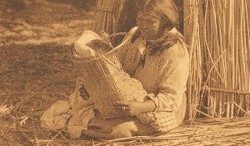
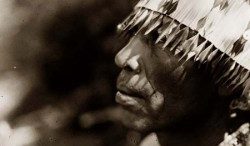
Between 1909 and 1915, the federal government purchased lands in California for the remaining homeless Indians. After decades of being landless and homeless, a presidential executive order on June 29, 1909 turned the lands purchased for homeless Indian found living near Ukiah into the 160-acre Guidiville Rancheria. The Guidiville parcel, like almost all of the others purchased for homeless Indians, had no water or infrastructure necessary for survival. The deplorable conditions led to disease and early death of many tribal people living on the new Rancheria. Other surviving members were forced to travel back and forth to the Bay Area to find work. This pattern continues today. In a report to Congress a federal employee wrote the following regarding the conditions at these Rancherias
“The sanitary condition of the Indian rancherias is bad, but the feeling of helplessness and despair is worse… It is evident that if the Indian is to keep alive he must have some means of making his living… nearly 6,000 souls are dangerously near the famine line… There is very little work of any kind to be had, and the Indians often have to go 50 or 100 miles to work. Then he can work but a short time, picking fruit or hops… It should be remembered that the Government still owes these people considerable sums of money, morally at least, but the Government owes more than money. No amount of money can repay these Indians for the years of misery, despair, and death which the Government policy has inflicted upon them.”
Since its first inception until it was illegally terminated, the first Guidiville Rancheria was a complete failure. The absence of water or adequate infrastructure made living on this barren land virtually impossible. In 1958, the federal government illegally terminated the Guidiville Tribe. The lands within the Rancheria were transferred to private hands. In 1987 (one year before the Indian Gaming Regulatory Act), Guidiville filed suit against the federal government for wrongful termination, as did many of the 42 terminated California tribes. Four years later, in 1991, the Scotts Valley/Guidiville federal lawsuit was settled and the Guidiville Band of Pomo Indians was restored to federally recognized status.
Unfortunately for the Guidiville Tribe it was restored to federal recognition in 1991 without a land base. Now the Tribe is faced with the Daunting task of trying to secure revenues to buy new potential reservation lands a region with some of the highest real estate values in the country. Following the land purchase the Tribe must then navigate the daunting federal process of transferring (gift deeding) those purchased lands (which must be free and clear and void of any title defects) lands back to the federal government to be held in trust status so the tribes jurisdiction can be restored. Often times the cost of the process of restoring any new lands to Trust status is well over the value of the land itself.
There are many strong forces such as Citys, Counties, special interest groups, individuals and politicians who do not want any more tribal land sin California, and fight hard to keep tribes from securing land. These forces are strong, well funded and well organized. Ironically these groups enjoy and prosper from the very lands that were unethically (forcefully at gun point), and illegally taken from the Tribal people in the first place.
Tribal Renewal
The destruction of Native American people and their way of life following contact with non-natives is a tragic part of American History. It is a history that should never be forgotten. However if remnants of our great Tribal societies that once were, are to survive in a modern world, we must move forward and find positive, productive ways to live within the many many constraints of the society we find ourselves in today. Our traditional values have always guided many of the decisions we make for our community today. Land to call our home; food, clothing, education and healthcare for our elders and family; respect for our creator and the land that serves us; our languages and cultural practices; sharing our stories, our culture; our bounty, and our lands, are part of our core values.
In reestablishing a reservation land base, we hope to teach the non-native people how our modern westernized tribal government can use our long standing core values and traditions to demonstrate:
That Tribal governments belong and are of critical importance in the family of governments in our nation.
That it is important the lands be shared. There is enough land for all types of governments, and the relatively few acres tribal governments control today represent but a minute fraction of those promised under the treaties. If our nation is to heal from the atrocities of the past, we must all share the land and its bounty for the good of all.
That our multigenerational perspectives as applied to social and environmentally sustainable development practices combined with respect for people and environment can create a new standard for other developments that yields multiple benefits to society and our mother earth.
That Tribal governments working together with, tribal governments, federal, state, local, governments, local citizens, environmental groups, the religious community, unions, schools, transportation agencies, industry, and private business interests can accomplish extraordinary things for the region that if pursued alone, would not be possible. The restoration and redevelopment of Point Molate is an example of such a possibility.”
— Merlene Sanchez, Guidiville Tribal Chairperson
Rebuilding a Tribal Government
In 1991, having been terminated for more than 30 years, the Guidiville Tribe regained federally recognized status, and little else. The tribe turned to the daunting task of rebuilding a functioning government that could provide for the many needs of its citizens. After adopting a basic organizational structure, one of the first objectives was to re-create a tribal trust land base.
Identifying an appropriate parcel of land, securing the resources to purchase it, and deeding it back to the federal government to be held as the Tribe’s replacement reservation, remains one of the most challenging aspects of rebuilding a Tribal government. Given that Northern California has some of the most expensive real-estate in the country, securing new trust land with no access to capital in an anti-Indian political environment was a nearly impossible endeavor. Yet, the Tribe had little choice but to try.
The Tribe has studied the political realities of acquiring land. They reviewed the Congressional report on termination and restoration prepared by the Advisory Council on California Indian Policy (ACCIP) that recommended the use of federal land or former federal land for restored reservation land. They studied criteria the BIA and other federal agencies were looking for in terms of cooperation, support and acceptance from the local communities when seeking new trust land. Knowing that any new reservation would require the removal of that land from a local jurisdiction, the Tribe also studied local jurisdictions’ concerns related to other tribal land acquisitions. Securing capital to acquire land was perhaps the biggest challenge.
Federal Contracting Services is a way in which other Tribes were able to work in a positive direction with the Federal government, provide much needed services, generate revenues, and create long range job opportunities and job training for Tribal members.
In 2007 the Guidiville Tribe created Black Oak Development. Black Oak is a special federal/Tribal Section 17 Corporation formed pursuant to the provisions of the Indian Reorganization Act as amended. Most tribal governments operating in the Federal Contracting arena, do so through the use of these special Section 17 corporations.